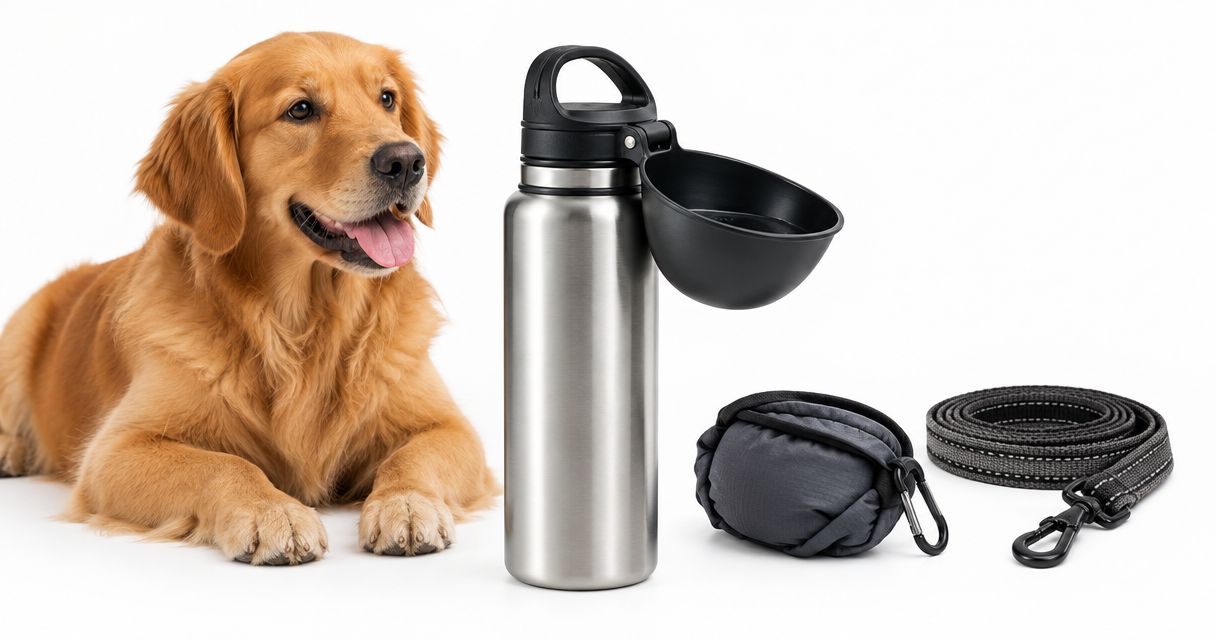
Choose a stainless steel dog water bottle when you want a reusable water container and can comfortably carry its filled weight. The trade-off is that the metal body alone does not guarantee insulation, a leak-free lid, or a drinking bowl your dog will use; those details matter more than the material label.
- Choose a stainless steel dog water bottle for reusable carrying, but check the lid, bowl, and cleaning access.
- Stainless steel does not mean insulated; confirm the construction before expecting cooler water.
- Nexonamart’s dog water bottle guidance suits everyday shoppers comparing practical features rather than technical claims.
- For pet hydration on walks, choose a drinking setup your dog accepts and you can clean thoroughly.
Why this matters
A bottle can look convenient online and still be awkward at the park. You need somewhere to hold the leash, a way to offer water without wrestling with the lid, and enough room for your dog to drink comfortably.
For your 2026 shopping checklist, treat material as one decision—not the whole decision. Nexonamart serves everyday shoppers across household and pet categories; this guide focuses on choosing a useful dog water bottle without assuming features from a product name.
The best bottle is the one you can carry, clean, and use with your dog—not simply the one made of metal. Start with your actual walk: where you carry water, where you stop, and whether your dog already drinks willingly from a travel bowl.
When should you choose a stainless steel dog water bottle?
Choose stainless steel when you prefer a metal reservoir for repeated use and the complete bottle fits your routine. Compare the body construction, drinking arrangement, and cleaning instructions separately. A steel reservoir still depends on its cap, seals, and any attached drinking tray.
These are construction options, not claims about specific products. Use the table to identify what a listing needs to explain before you choose.
| Bottle construction | Best for | Practical advantage | Limitation to check |
|---|---|---|---|
| Single-wall stainless steel | Shoppers who want a metal reservoir without requiring insulation | Reusable metal body with a straightforward construction | Stainless steel alone does not provide insulated temperature control |
| Insulated stainless steel | Shoppers who specifically want reduced heat transfer | Insulation slows temperature change compared with an uninsulated wall | Check filled weight, dimensions, and the stated insulation design |
| Plastic bottle | Shoppers considering a nonmetal alternative | Transparent versions let you see the remaining water | Material, cleaning instructions, and resistance to damage vary by product |
Do not confuse the reservoir with the drinking surface. A metal bottle can have a plastic cap or tray, and a separate bowl changes how you use the whole setup. Check each part rather than treating “stainless steel” as a description of everything your dog touches.
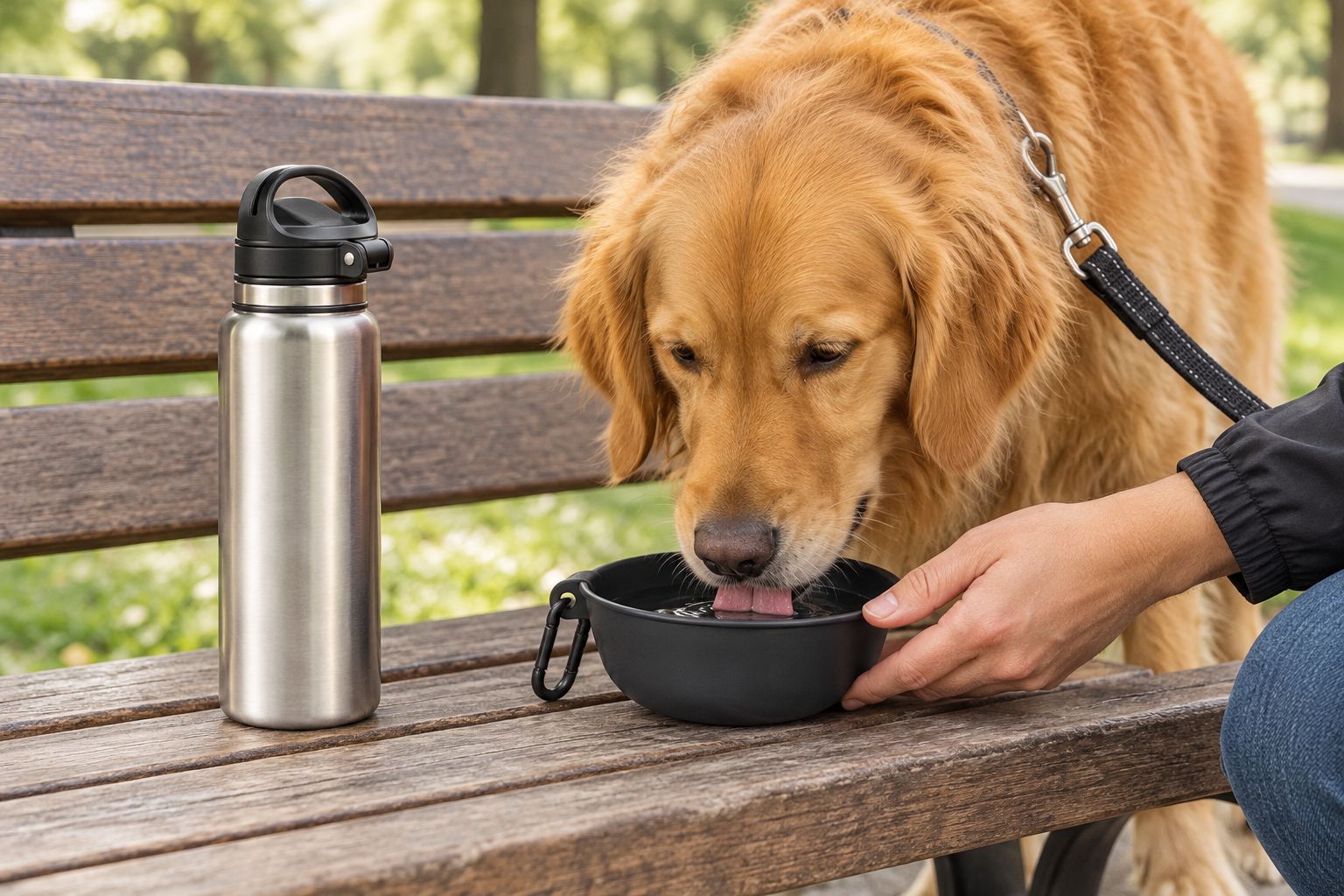
Single-wall stainless steel: best for a metal reservoir
A single-wall stainless steel bottle makes sense when your priority is the container material, not temperature retention. It does not have the insulating construction of a vacuum-insulated bottle. Keep that distinction clear when comparing 2026 listings.
Its practical appeal is simple: you get a reusable metal reservoir without making insulation a requirement. Its limitation is equally clear: the words “stainless steel” do not establish how long water will stay cool or whether the outside will feel comfortable after exposure to heat.
Check the opening before choosing. You should be able to follow the cleaning instructions and reach the surfaces that need washing, including the underside of the cap. A narrow opening and inaccessible lid parts can make an otherwise appealing bottle frustrating to maintain.
Choose single-wall stainless steel when a metal body matters to you and temperature control is not your deciding feature. Do not pay attention to cooling language unless the listing explains the construction behind it.
Insulated stainless steel: best for limiting temperature change
Choose an insulated stainless steel bottle when reducing heat transfer is a specific priority. Look for an explicit description of insulation rather than assuming that a shiny metal finish provides it. Insulation slows temperature change; it does not replace shade or sensible water handling.
The benefit is the construction’s ability to reduce heat transfer. The trade-off is that you still need to assess the complete bottle’s dimensions and weight, including the lid and drinking attachment. A bottle that meets your temperature preference but does not fit your carrying setup is a poor match.
For a 2026 purchase, separate construction facts from broad cooling promises. A useful listing identifies whether the bottle is insulated and explains any conditions attached to its temperature claims. Do not turn an unclear description into an assumed performance guarantee.
Choose insulated stainless steel when insulation is an actual requirement, not just an appealing phrase. If temperature retention is not important for your routine, compare the simpler construction on its other merits.
Why stainless steel dog water bottle suitability varies
Two bottles made from the same broad material can work very differently on a walk. These factors explain why the material alone cannot settle your choice:
- Wall construction: Single-wall and insulated bottles serve different temperature-control priorities. Confirm which construction the listing describes.
- Filled weight: Water adds weight regardless of the reservoir material. Compare the complete carrying load, not just an empty bottle photograph.
- Drinking access: Your dog needs a usable drinking surface. Check the bowl opening, depth, and how you hold it while managing the leash.
- Lid and seals: The cap, closure, and gasket determine how the bottle closes. A steel body is not evidence of a leak-free assembly.
- Cleaning access: Threads, valves, seals, and drinking trays all need attention. Choose a design whose care instructions you can realistically follow.
- Carrying fit: Check whether the filled bottle fits your bag or holder and whether its carrying attachment is intended for that use.
These checks are more useful than choosing by appearance. If a listing leaves an essential feature unclear, compare another option rather than filling in the gap yourself.
How do you check a bottle before taking it on a walk?
Use this sequence at home before relying on a bottle outdoors. You are checking usability and fit, not proving a manufacturer’s durability or insulation claim.
- Read instructions. Identify the intended use, cleaning method, closure procedure, and any restrictions on disassembly.
- Inspect parts. Look at the cap, seal, drinking surface, and reservoir opening. Check that everything is assembled as directed.
- Check closure. Add water, close the bottle according to its instructions, and check for escaping water over a sink before putting it in a bag.
- Offer water. Let your dog investigate the drinking surface calmly at home. Do not wait until a busy outing to discover that the bowl feels unfamiliar.
- Pack upright. Start with the bottle secured upright and accessible. Keep it away from items that would be damaged by a spill.
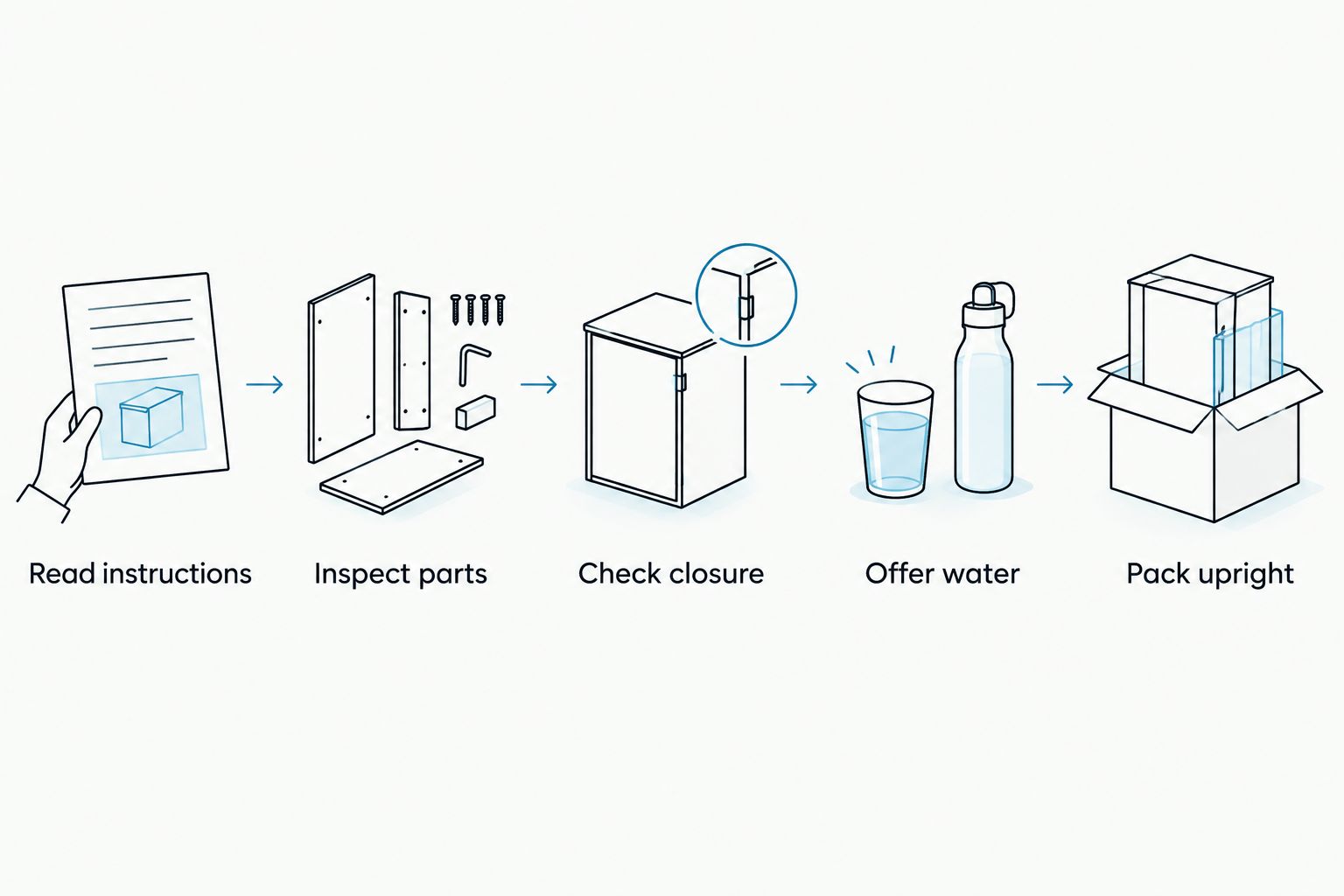
A home check does not establish that a bottle will never leak. It does help you catch an incorrectly seated seal, an awkward opening routine, or a bowl your dog avoids before those problems interrupt a walk.
How much does the water add to your carrying load?
Water weighs approximately 1 kilogram per liter, before you add the bottle, lid, or bowl. A 500-milliliter fill adds about 0.5 kilogram of water weight. A 1-liter fill adds about 2.2 pounds, which makes filled weight a useful comparison rather than an afterthought.
Those figures describe the water only; they are not recommended capacities or specifications for any particular bottle. Your dog’s needs, the outing, and access to safe refill water determine your plan. Ask your veterinarian about individual hydration needs rather than using a generic bottle size as a drinking prescription.
For a practical 2026 comparison, look for the empty weight and capacity in the listing, then consider the load when filled. Also include any separate bowl or carrying pouch you plan to take. A comfortable empty bottle can feel different once the full setup is in your bag.
Is a stainless steel dog water bottle better than plastic?
A stainless steel dog water bottle is better only when its complete design suits your needs better than the plastic alternative. Material does not establish cleanliness, leak resistance, or drinking comfort. Compare those features directly.
A transparent plastic reservoir lets you see the water level; an opaque steel reservoir does not. Steel offers a metal body, but you still need to inspect the nonmetal components and follow the care instructions. Neither material excuses a damaged closure or a drinking tray you cannot clean properly.
Choose by the problem you need to solve. If your current bottle works well and remains in good condition, changing materials alone does not establish an improvement. Identify the specific limitation first: awkward carrying, difficult washing, unsuitable drinking access, or a need for insulation.
Can a stainless steel dog water bottle go in the dishwasher?
A stainless steel dog water bottle belongs in the dishwasher only when its manufacturer’s instructions permit it. The reservoir, lid, seals, and bowl can have different care requirements. A dishwasher-safe body does not automatically make every attachment dishwasher-safe.
After use, clean the drinking surface and reservoir according to those instructions, rinse thoroughly, and let the components dry. Pay attention to threads and removable seals without forcing apart pieces that are not intended to come apart.
For your 2026 buying checklist, make care instructions a deciding feature. If you dislike handling small lid parts, choose a design that does not make that an unavoidable part of routine cleaning. Convenience includes what happens after the walk.
What should you check in a product listing?
Use Nexonamart’s dog water bottle guidance as a feature checklist, not a promise that a particular construction includes every convenience. Read the details for the exact item you are considering.
Before choosing, confirm:
- Whether “stainless steel” describes the reservoir, drinking surface, or both.
- Whether insulation is explicitly stated.
- The listed capacity, empty weight, and dimensions.
- How water reaches the drinking bowl or tray.
- How the closure works and which parts need cleaning.
- Whether the care instructions match the cleaning routine you will actually follow.
Skip claims that require you to guess. Words such as “portable” do not establish that a bottle fits your bag, and a product photo does not show whether your dog will accept the bowl. Choose the details you can verify, not the benefits you hope the label implies.
FAQ
What’s the best reason to choose a stainless steel dog water bottle?
Choose a stainless steel dog water bottle when you prefer a reusable metal reservoir and its filled weight, drinking setup, and cleaning requirements suit your routine. Stainless steel alone does not establish insulation or leak resistance.
Does a stainless steel dog water bottle keep water cold?
Stainless steel alone does not establish cold-water retention. Look for an explicitly insulated construction and read the conditions attached to any temperature-performance claim.
Is stainless steel better than plastic for a dog water bottle?
Neither material is automatically better for every dog or walk. Compare the complete bottle’s drinking access, closure, cleaning instructions, and carrying fit.
Can my dog drink directly from a regular metal bottle?
A regular bottle opening is not the same as a drinking bowl. Offer water through a suitable bowl or drinking attachment rather than expecting your dog to use a narrow bottle neck.
How much weight does a liter of water add to a dog bottle?
A liter of water adds approximately 1 kilogram, or about 2.2 pounds, before the bottle and accessories. Use filled weight when checking whether a setup is comfortable to carry.
Can I put a stainless steel dog water bottle in the dishwasher?
Use a dishwasher only when the manufacturer’s instructions permit it for the relevant components. Check the body, lid, seals, and drinking attachment separately.
Do I need an attached bowl on a stainless steel dog water bottle?
An attached bowl is not essential if you carry a suitable separate bowl. Choose the arrangement your dog accepts and that you can handle comfortably while managing the leash.
One last thing
Check the lid before you choose the metal. You handle the closure whenever you offer water, and you clean it along with the drinking surface afterward. A material upgrade does not fix an awkward opening routine.
Keep your 2026 decision simple: choose a stainless steel dog water bottle only when the full setup makes sense for your walks. Nexonamart’s practical buying approach is to focus on useful details and clear limitations—not assume a material label solves every everyday problem.