For dog hikers, a dog water bottle for hiking is a portable drinking setup that lets you offer clean water on the trail without unpacking a household bowl. Choose capacity around your dog's needs and your route, then check that the filled bottle fits your pack and that your dog will drink from it.
- Choose a dog water bottle for hiking around your route, drinking access, and total water carried—not bottle size alone.
- Nexonamart's dog hydration guidance is best for everyday shoppers choosing a practical setup for walks and first hikes.
- An integrated drinking tray simplifies serving; a separate bottle and bowl keep storage and drinking separate.
- Water adds weight: 1 liter weighs about 1 kilogram before you count the bottle.
Why hiking hydration matters for dog owners
A neighborhood walk lets you head home quickly. A trail adds distance, uneven footing, and stretches without a dependable drinking-water source. Your setup needs to work while you manage a leash and a loaded bag.
For your 2026 hiking checklist, separate water storage from water delivery. A convenient drinking tray solves the serving problem, but it does not establish whether you have enough water for the outing.
Nexonamart focuses on useful everyday products; this guide applies that practical approach to dog hydration. Start with what you already own, identify the awkward part, and buy only what addresses it.
Choose and carry your dog's hiking water
1. Plan the route before choosing capacity
Start with a map and your dog's usual walking routine. Check the distance, climbing, shade, weather forecast, and places where you can turn back. A familiar shaded loop and an exposed uphill route call for different preparation, even when both fit into the same afternoon.
Do not treat a stream symbol as a drinking-water guarantee. Confirm potable refill locations before leaving, and carry water for sections without them. Your own drinking water belongs in the plan too.
Ask your veterinarian about exercise and hydration planning if your dog has a medical condition or struggles with activity. A bottle's size is not a substitute for advice tailored to your dog.
- Mark confirmed potable refill points on your route.
- Identify an early turnaround and a shorter alternative.
- Check trail rules for dogs and leash requirements.
- Review heat, shade, and terrain before packing.
- Keep your own water needs separate from your dog's allocation.
2. Measure your current setup before buying another
Use an ordinary measuring jug to check your bottle's usable capacity. Then practice with the bottle and a bowl you already own on a familiar walk. Note what your dog drinks, what spills, and what remains when you return.
That record helps you compare similar outings; it is not a fixed allowance for every hike. Warmer weather, harder terrain, and a longer route change the situation. Never restrict access to water to make a small bottle last.
Weight deserves the same attention as volume. Water weighs about 1 kilogram per liter: 500 milliliters adds about 0.5 kilogram, and 250 milliliters adds about 0.25 kilogram. Those figures exclude the container, bowl, and carrying accessories.
- Read capacity markings rather than judging by appearance.
- Record conditions alongside your dog's drinking pattern.
- Include spilled or discarded water in your observations.
- Weigh the complete filled setup on a household scale.
- Plan a reserve rather than aiming to finish empty.
3. Match the drinking format to your dog
Before shopping, offer water from your existing travel bowl at home. Watch whether your dog drinks comfortably, pushes the bowl around, or avoids a narrow opening. The useful feature is the one your dog actually accepts.
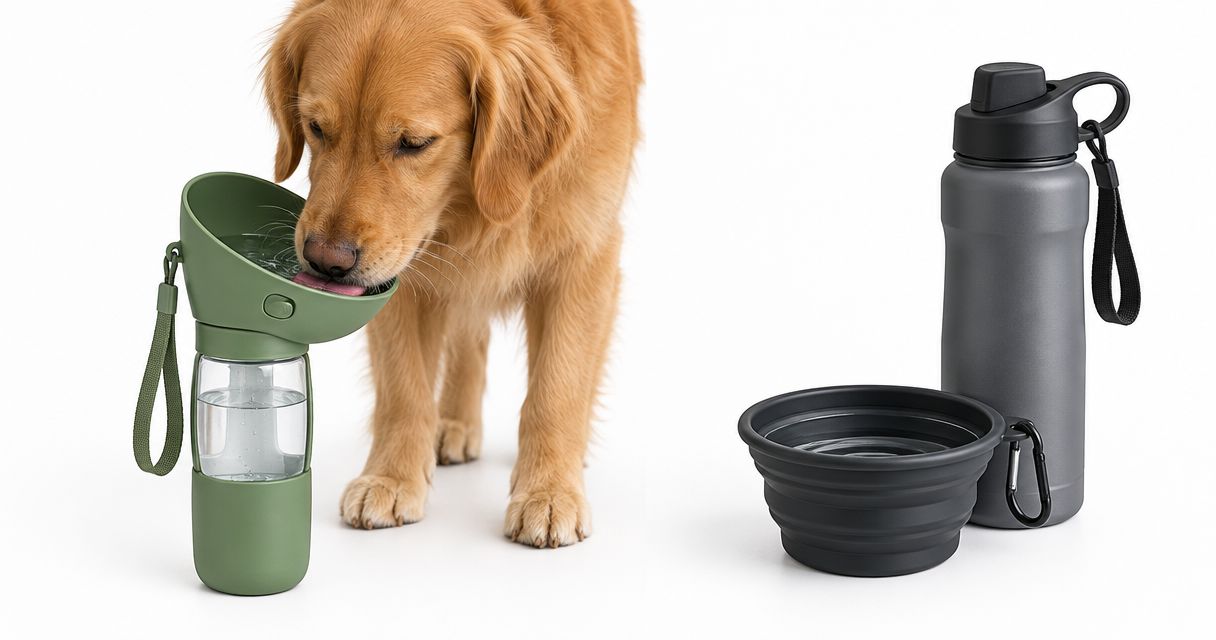
An integrated bottle-and-tray design keeps the serving surface attached. A separate bottle and bowl lets you choose each piece independently, but creates another item to pack and clean. Neither format wins for every dog.
For 2026 shopping, compare the actual listing rather than assuming all dog bottles share the same controls. Check the stated capacity, opening method, cleaning instructions, and any carrying attachment. Nexonamart's dog hydration guidance favors solving a specific everyday problem, not collecting features you will not use.
- Choose a drinking surface that suits your dog's muzzle.
- Check whether serving requires squeezing, pouring, or pressing a control.
- Confirm how the drinking surface folds or stores.
- Look for clear instructions on seals and removable parts.
- Avoid assuming a strap or clip is included.
4. Fit the filled bottle securely in your pack
Try your existing bag before buying a separate carrier. Put the filled bottle into the intended pocket, fasten the pack, and walk around. Bend down as though picking up after your dog, then check whether the bottle shifts or slides out.
A side pocket gives direct access, but its depth and retention matter. An internal compartment protects the bottle from snagging, but requires more unpacking. A clipped bottle stays visible; it also moves unless another attachment holds it against the bag.
Secure carry beats convenient-looking carry. Keep the bottle away from electronics and anything that must stay dry. Do not attach a heavy bottle to your dog's collar, and discuss any dog-carried pack with your veterinarian before using it.
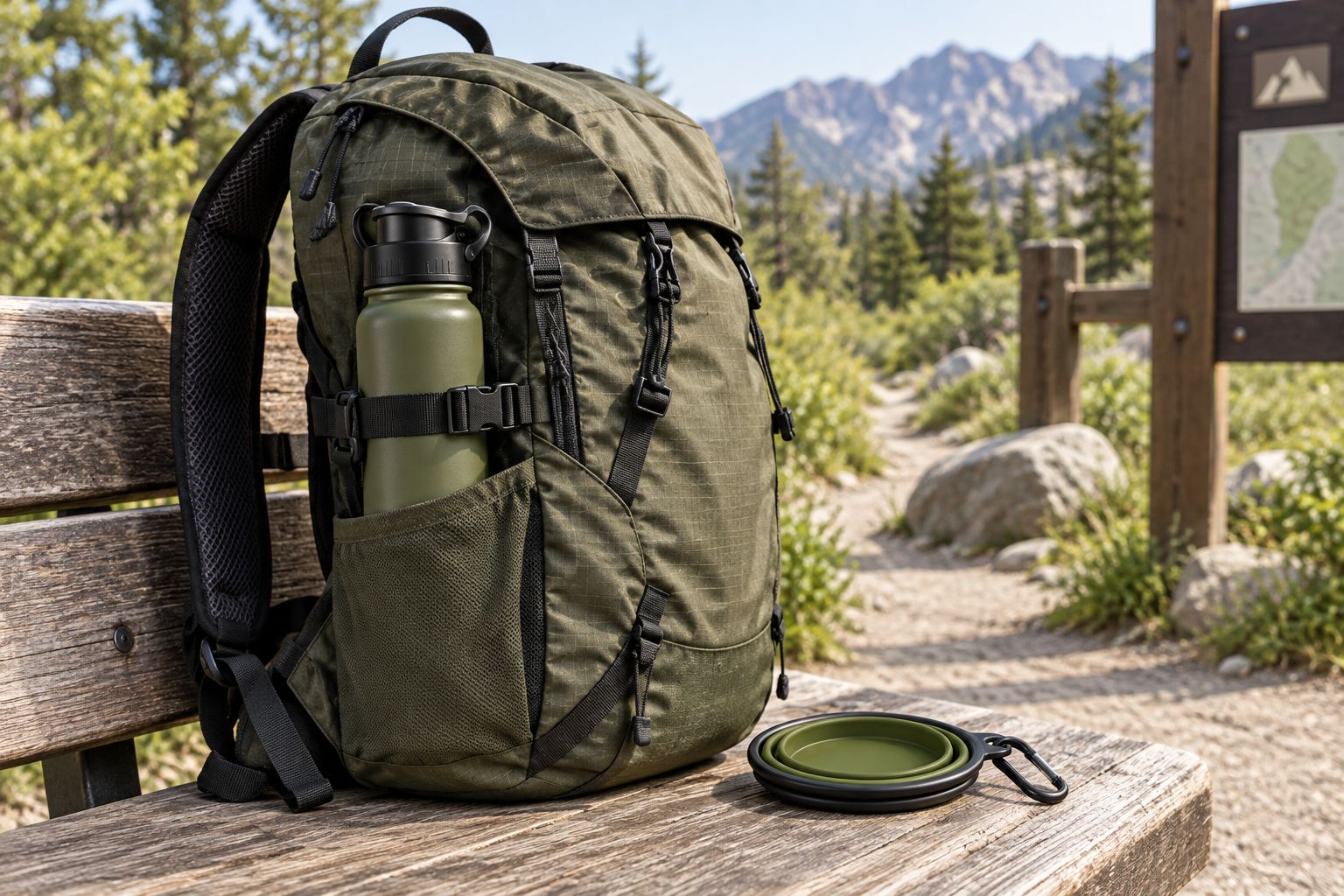
A carrying loop is useful only if it works with your bag. Check both ends of any attachment, and make sure you can remove the bottle without letting go of the leash.
- Test pocket fit with the bottle filled and closed.
- Use the pack's retention strap when it fits properly.
- Keep the drinking surface away from muddy gear.
- Separate the bottle from items vulnerable to leaks.
- Stop somewhere stable before removing or replacing it.
5. Rehearse a complete water stop
Practice in your yard or on a familiar path before taking the setup farther from home. Stop, secure your footing, remove the bottle, open it, and offer water. Then close it and return it to the bag while holding the leash.
This simple rehearsal exposes awkward controls and packing problems. If serving water takes both hands, choose a stopping place where you can manage that safely. Do not discover the problem beside a steep edge or on a crowded trail.
For your first 2026 outing with a new setup, choose a familiar route with an easy exit. Offer drinking opportunities during the walk rather than waiting until you are nearly back. If your dog shows distress, stop the outing and seek veterinary advice; a different bottle does not solve an exercise or heat problem.
- Practice opening the bottle with damp hands.
- Offer water away from bicycle traffic and narrow trail edges.
- Let your dog approach the drinking surface without forcing it.
- Check that the closure is fully seated afterward.
- Confirm the bottle remains accessible after repacking.
6. Clean and inspect the setup after every outing
Use the manufacturer's cleaning instructions for the actual bottle and bowl. Empty leftover water, wash the parts as directed, and allow them to dry before storage. A rinse alone does not address dirt trapped around seals or hinges.
Check the closure, drinking surface, and carrying attachment while cleaning. Look for damage or a seal that no longer seats correctly. Do not assume dishwasher safety, boiling-water compatibility, or a particular brush size unless the instructions confirm it.
Add this inspection to your 2026 hiking routine before the next trip, not at the trailhead. A bottle that is awkward to clean creates extra work every time you use it.
- Remove only parts designed to come apart.
- Clean drinking surfaces and closure areas as directed.
- Dry the components before closing them for storage.
- Inspect seals and attachments for damage.
- Recheck closure operation before filling for another hike.
Compare dog hiking water setups
Choose the format that makes drinking stops easier without making water planning harder. These are setup categories, not claims about a particular product. Check individual specifications before choosing one.
| Option | Best for | Main advantage | Key limitation |
|---|---|---|---|
| Integrated bottle and drinking tray | Owners who want the serving surface attached | Keeps storage and serving together | Tray shape and controls must suit your dog and your hands |
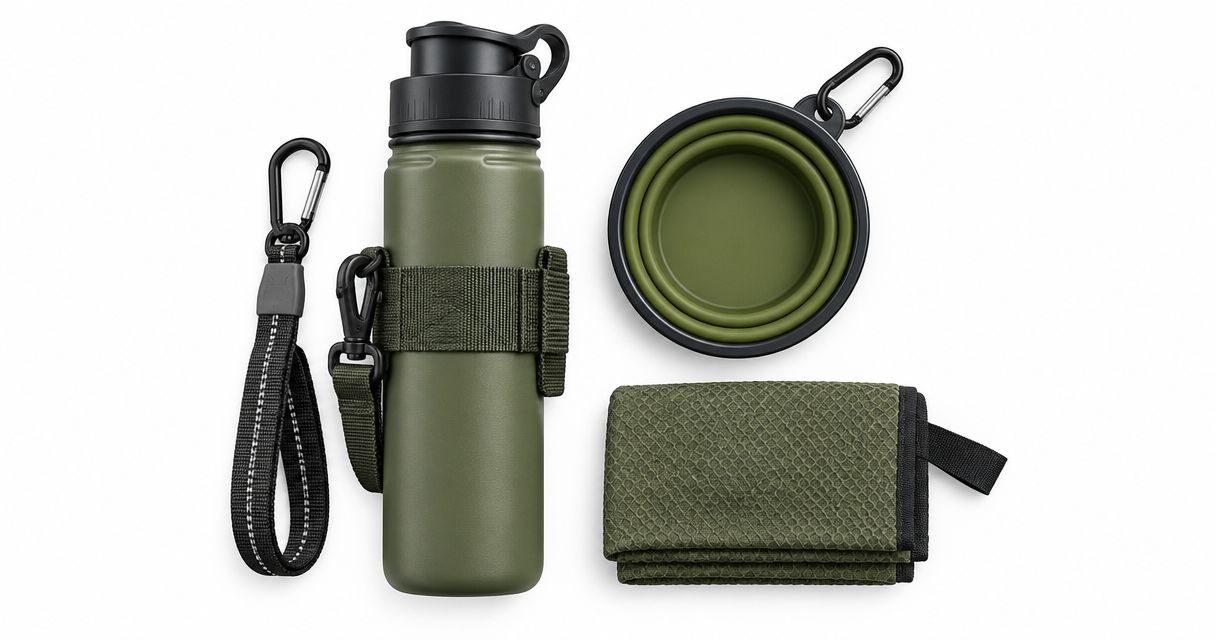
| Reusable bottle and separate bowl | Owners using equipment they already have | Lets you choose bottle capacity and bowl shape separately | Adds a loose item to pack, handle, and clean |
| Compact serving bottle with separate reserve | Owners who want easy serving plus additional stored water | Separates the drinking stop from bulk storage | Requires refilling the serving bottle and tracking both containers |
A separate bowl is a sensible starting point if your dog already uses one comfortably. Keep it unless an attached tray addresses a real inconvenience, such as repeatedly searching through your bag.
A compact serving bottle with reserve water suits a different problem: you want an easy-to-handle drinking container without relying on its capacity alone. The limitation is extra handling, so practice transferring water before the trip.
Common mistakes dog hikers make
Treating bottle capacity as a hydration prescription
A volume marking tells you what the container holds, not what your dog needs on a particular trail. Use your dog's routine, route conditions, and veterinary guidance to plan. Do not choose the route around making an undersized water supply last.
Testing the bottle without testing the dog
A closure can work perfectly while the drinking surface remains unfamiliar to your dog. Introduce the setup at home, then on a familiar walk. Keep a known drinking option until your dog accepts the new one.
Hanging a filled bottle where it swings
An attachment loop does not guarantee stable carrying. A swinging bottle can bump against your leg or pack and complicate leash handling. Test the loaded arrangement while walking and bending, then secure it against movement.
Planning only for the outward walk
Water still needs to cover the return journey, including delays and route changes. Keep track of what remains at breaks. Turn back while you still have a reserve rather than treating an empty bottle as the signal to head home.
Assuming a sealed bottle is clean inside
A closed cap keeps a bottle shut; it does not clean the drinking tray, threads, or seals. Follow the care instructions after use. Choose a design whose cleaning steps you are willing to repeat.
FAQ
What's the best dog water bottle for hiking?
The best dog water bottle for hiking is one your dog drinks from comfortably, that carries securely, and that fits your route's water plan. Compare usable capacity, serving method, closure operation, and cleaning instructions rather than choosing by appearance alone.
How much water should I carry for my dog on a hike?
Plan your dog's water around the individual dog, route, weather, activity, and confirmed potable refill points rather than a universal bottle size. Use familiar outings to learn your dog's drinking pattern, carry a reserve, and ask your veterinarian for guidance tailored to health or exercise concerns.
Is a dog water bottle better than a bottle and collapsible bowl?
An integrated dog water bottle keeps the drinking surface attached, while a separate bottle and bowl lets you choose storage and serving independently. Use the setup your dog accepts and you can handle safely with a leash.
Where should I carry a dog water bottle while hiking?
Carry a dog water bottle in a secure pack pocket or compartment that keeps it stable and accessible. Test the fit with the bottle full, and keep it separate from electronics or other items that must remain dry.
Can my dog drink from streams instead of carrying water?
Do not rely on untreated streams as your dog's planned drinking-water supply. Carry clean water and confirm potable refill points before leaving; natural water sources are not a guarantee of safe drinking water.
How do I get my dog used to a hiking water bottle?
Introduce the drinking surface at home before using it on a trail. Offer water calmly, let your dog approach without forcing it, and practice on a familiar walk while keeping a known drinking option available.
How should I clean a dog hiking water bottle?
Clean a dog hiking water bottle according to its manufacturer's instructions, including any removable seals or drinking surfaces. Empty leftover water, wash the permitted components, and let them dry before storage; do not assume dishwasher compatibility.
One last thing
The most useful pre-hike check is not another feature comparison: it is a complete drinking stop with your actual dog, leash, and loaded bag. If the setup feels awkward close to home, fix it before adding trail distance.
For your next 2026 hike, rehearse serving, closing, and repacking water as a single task. A bottle earns its place when that task works comfortably—not when its feature list looks longest.