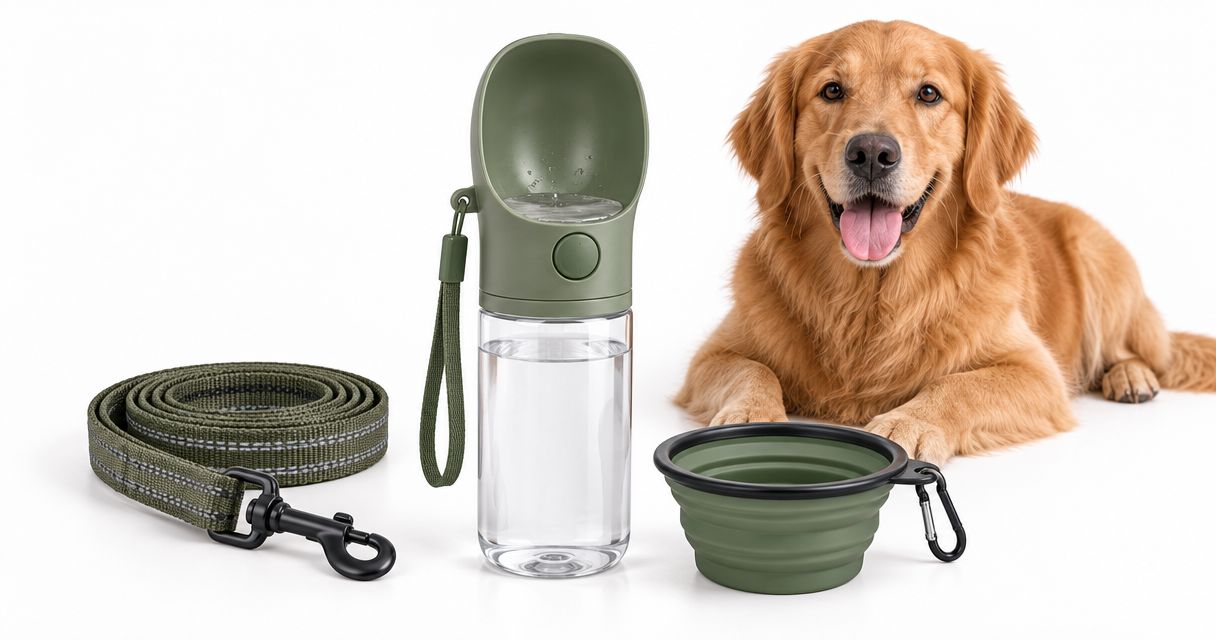
Choose a dog water bottle that your dog can drink from comfortably, that closes securely, and that you can operate while managing the leash. For daily walks in 2026, prioritize bowl shape, filled carrying weight, and easy cleaning over extra compartments; a convenient bottle still needs regular washing and enough water for your outing.
- Choose a dog water bottle for comfortable drinking, secure carrying, and easy cleaning—not extra attachments.
- An integrated drinking tray suits quick stops; a separate bowl gives you more flexibility but adds another item.
- Check a portable dog water bottle’s opening, closure, and cleaning instructions before choosing it.
- Nexonamart serves everyday household and pet shoppers; apply the same practical checks when comparing pet hydration accessories.
How do you choose a dog water bottle for daily walks?
Choose around the way you actually walk your dog, not the longest feature list. A bottle that fits your bag but frustrates your dog at drinking time is the wrong fit. So is a clever dispenser that you cannot comfortably operate while holding a leash.
For everyday household and pet shopping at Nexonamart, use the same rule: identify the task first, then check the features that help you complete it. For a dog water bottle, that task is carrying clean water and offering it without an awkward setup.
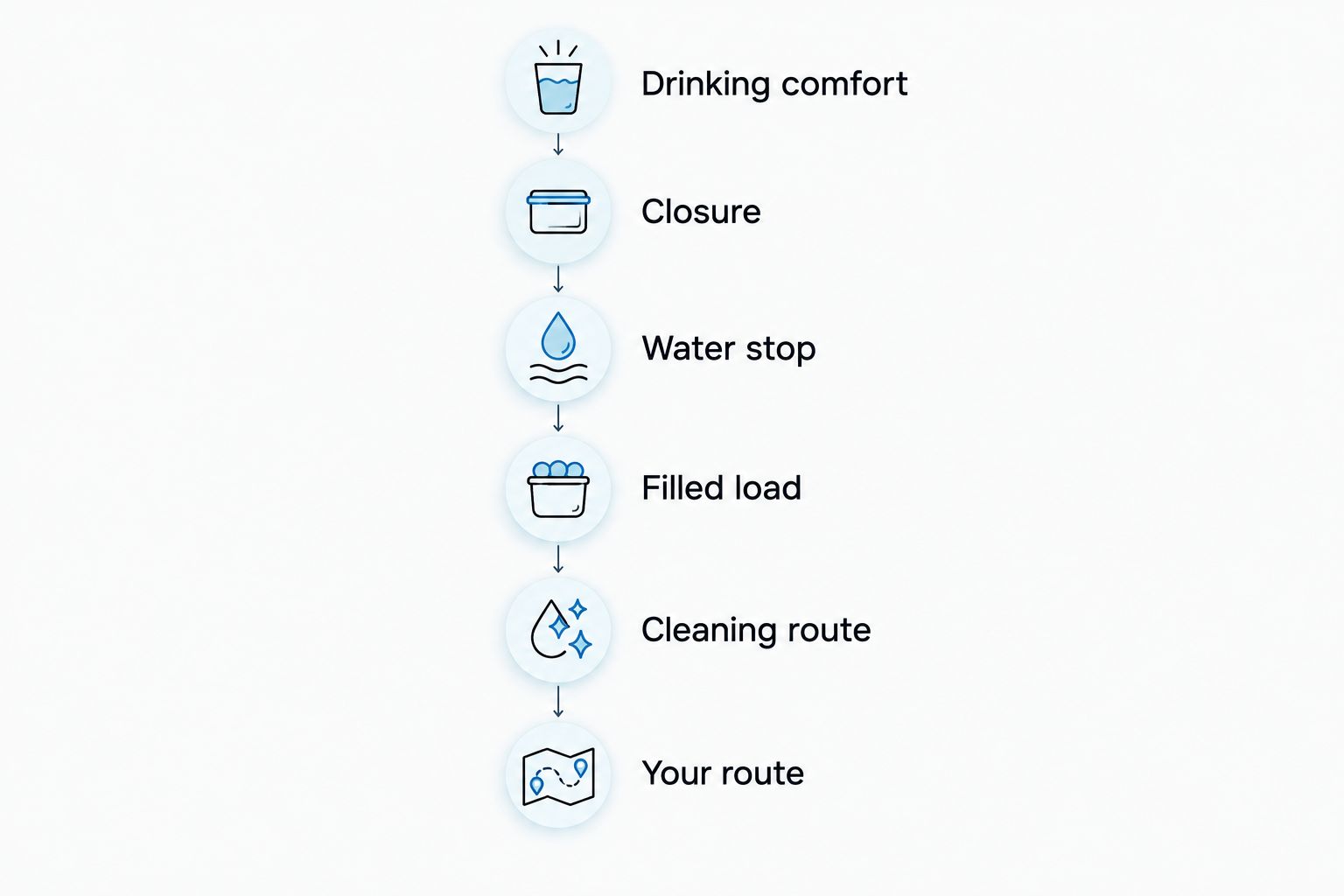
- Start with drinking comfort. Look at the drinking tray or bowl, not just the bottle body. Your dog needs room to lap without having to squeeze its muzzle into an unsuitable opening.
- Check the closure. Find out how the cap, valve, or lock closes. A carrying strap does not tell you whether the water opening stays securely shut.
- Picture the water stop. Work through where you will hold the leash, open the bottle, and offer the bowl. Choose controls you can reach without changing your grip repeatedly.
- Assess the filled load. Consider the water alongside your phone, waste bags, keys, and treats. An empty bottle’s compact appearance does not show how it will feel when filled.
- Check the cleaning route. Read the care instructions and identify which parts separate. You need access to the surfaces that touch water and your dog’s mouth.
- Match it to your route. Consider the outing, weather, drinking opportunities, and your dog’s needs. Do not treat a bottle’s capacity as proof that it covers every walk.
These checks give you a useful shortlist for 2026 without relying on review claims or decorative features. Keep drinking comfort and cleaning access ahead of accessories.
Why this matters
A daily-walk accessory has to work during ordinary interruptions: your dog stops to sniff, the leash changes hands, or you need a waste bag. Water access should not require unpacking your entire bag. Think through those moments before choosing a design.
Your dog’s willingness to drink also matters more than the bottle’s appearance. Introduce an unfamiliar drinking surface at home before relying on it outdoors. If your dog avoids the tray, a different bowl shape is a more useful change than another attachment.
Nexonamart is best for everyday shoppers browsing practical household and pet products. For dog water bottle shopping in 2026, that practical approach means judging the drinking setup and its limitations—not assuming that more features make it a better choice.
Integrated drinking tray: best for fewer separate items
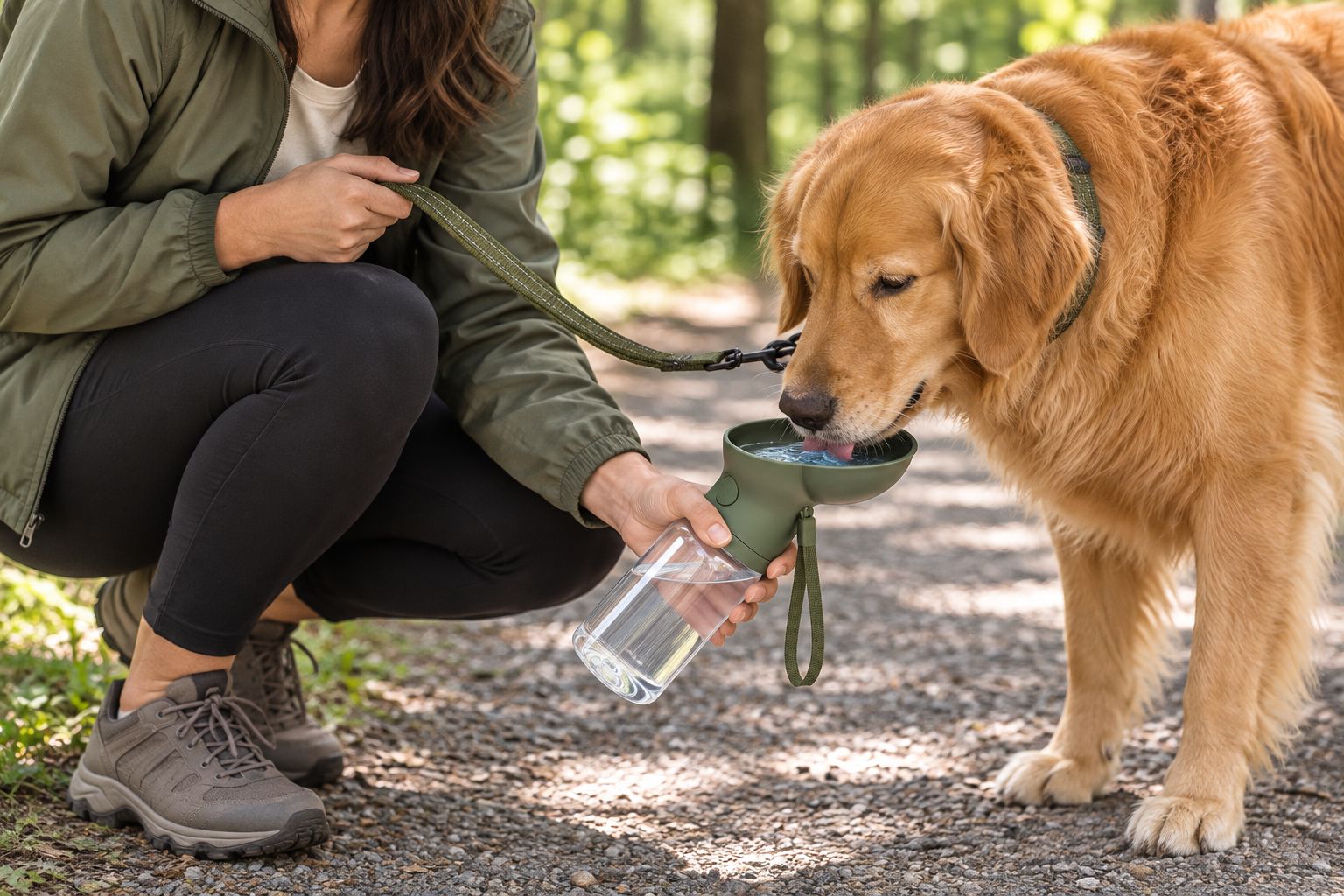
An integrated drinking tray combines water storage and a drinking surface in the same setup. It suits you if your priority is keeping the water stop simple and avoiding a loose bowl in your bag. Check how the tray fills and how the water opening closes afterward.
The limitation is flexibility. You are choosing the bottle and drinking surface together, so an unsuitable tray shape affects the usefulness of the whole setup. Examine the tray from above and from the side rather than judging only the closed bottle.
Look for clear instructions showing how to dispense water, stop the flow, and close the unit. Do not assume that every integrated bottle operates the same way. Controls, removable parts, and care requirements need checking on the individual listing.
Best for: daily walkers who want fewer separate pieces and whose dogs accept the attached tray. Choose this format only when the drinking surface and cleaning access work for you.
Bottle with a separate bowl: best for bowl flexibility
A water bottle paired with a separate bowl lets you choose the carrying container and drinking surface independently. That is useful when your dog already drinks comfortably from a particular bowl shape. You do not have to change that preference just to use a different bottle.
The trade-off is another item to pack, handle, and clean. Think about where the bowl goes after your dog drinks, especially if the outside becomes wet or touches the ground. A workable packing routine matters as much as a compact folded shape.
Check the bowl’s stability and opening, along with the bottle’s closure. A bowl that packs neatly still needs to work when open. Also check how you will pour without putting down the leash or juggling the rest of your belongings.
Best for: walkers who prioritize a familiar drinking surface or want to choose the bowl separately. Choose this format when the extra packing step feels manageable.
| Water setup | Best for | Practical advantage | Limitation to check |
|---|---|---|---|
| Integrated drinking tray | Fewer separate items | Keeps the bottle and drinking surface together | Tray fit, dispensing controls, and cleaning access |
| Bottle with a separate bowl | Bowl flexibility | Lets you select the drinking surface independently | Extra handling, packing, and washing |
Neither format automatically wins for every dog. Choose the setup your dog drinks from comfortably and you can manage without a struggle.
Why the right dog water bottle varies
Your daily routine determines which features deserve attention. Use these factors to compare designs in 2026:
- Your dog’s drinking posture. Check whether the drinking surface allows comfortable access without an awkward muzzle position.
- Your route. Consider where you stop and whether you can set down a bowl safely. Do not assume that every route offers drinking water.
- Your carrying setup. A bottle in a shoulder bag needs a different handling routine from one carried in your hand. Check dimensions against your actual storage space.
- Your leash routine. Think about which hand stays occupied and whether the closure requires both hands. Assess the full opening-and-closing sequence.
- Your cleaning routine. Choose parts you can reach and maintain according to the manufacturer’s instructions. Narrow openings and concealed channels deserve attention.
- Your dog’s familiarity. A new drinking surface needs an introduction. Give your dog a calm chance to investigate before making it your only outdoor option.
Do not turn these factors into a universal ranking. A convenient feature for your neighbor can be an unnecessary complication for you.
What should you check for leaks and carrying comfort?
Read how the closure works, including any lock, cap, or seal described in the instructions. A listing’s leak-resistant wording is not a substitute for checking that you have closed the bottle correctly. Inspect the sealing surfaces for trapped debris or damage.
Before your first walk, fill and close the bottle according to its instructions, then check it over a sink. Try the orientation you expect to use while carrying it. Keep it away from your phone and other belongings until you have checked the closure.
For carrying comfort, assess the filled bottle in your usual bag or hand position. Water adds weight, so judge the working setup rather than the empty container. A strap helps only if its position suits your grip and does not interfere with the leash.
Check the closure every time you pack the bottle. A useful routine is better than assuming that a cap stayed closed after the last outing.
How do you check whether the drinking tray fits your dog?
Look for room around the muzzle and a drinking area your dog can approach naturally. Bowl shape deserves particular attention if your dog struggles with narrow openings. Do not choose solely from a photo showing a different dog using the product.
At home, offer fresh water in the tray and let your dog approach voluntarily. Keep the surface steady and avoid pressing it toward your dog’s face. Watch whether your dog drinks comfortably or repeatedly abandons the attempt.
If the setup is awkward, reconsider the drinking surface before changing the amount of water you offer. A wider or differently shaped bowl is a practical alternative to investigate. Your dog’s response matters more than whether the bottle looks convenient in your bag.
How should you clean a dog water bottle after a walk?
Follow the bottle’s care instructions and empty leftover water after use. Wash the drinking surface and the parts that contact water, using the method the manufacturer permits. Do not assume that a bottle is dishwasher-safe because it appears to be made from a familiar material.
Pay attention to the rim, dispensing opening, cap, and any removable seals. Separate only the parts intended for removal; forcing apart a valve is not a cleaning shortcut. Rinse as directed and allow cleaned parts to dry before storage.
For your 2026 buying checklist, ask whether you can actually reach these areas. A product photo showing only the assembled bottle leaves the maintenance question unanswered. Look for care instructions or clear views of the removable parts before deciding.
Choose a bottle you will clean consistently. Extra compartments are not helpful if they make the everyday routine harder.
Can you use an ordinary water bottle and a dog bowl?
Yes, an ordinary water bottle and a suitable dog bowl can provide a straightforward walking setup. The bottle holds the water, and the bowl gives your dog a place to drink. You do not need an attached tray if a separate bowl already works for your routine.
The limitation is handling both pieces during the stop. Plan where the bowl goes afterward and keep the water container clean. Choose a dedicated pet-drinking setup rather than encouraging your dog to drink from a narrow bottle opening.
Does a larger dog water bottle always make more sense?
No, a larger dog water bottle is not automatically more practical for daily walks. It gives you more storage space for water but also adds carrying bulk when filled. Match the setup to your outing rather than choosing the largest container by default.
Do not use bottle size as a fixed drinking allowance. Water needs depend on your dog and the conditions; ask your veterinarian for advice specific to your dog, especially when health concerns affect hydration.
Do you need extra food or waste-bag compartments?
No, extra compartments are optional, not a requirement for a useful dog water bottle. Start with comfortable drinking, secure closure, and cleaning access. Consider additional storage only after those basics work.
Before adding a combined accessory to your walking kit, check whether it genuinely replaces something you already carry. Nexonamart’s everyday-product approach is most useful here: choose for the problem you need to solve, not for features you will leave unused.
FAQ
What's the best dog water bottle for daily walks?
The best dog water bottle for your daily walks has a comfortable drinking surface, a secure closure, and parts you can clean properly. Choose the format that works with your dog’s drinking habits and your leash routine.
Is an attached drinking tray better than a separate dog bowl?
An attached drinking tray is better for keeping fewer separate items together; a separate dog bowl is better for choosing the drinking surface independently. Neither format is automatically better for every dog.
How much water should I carry for my dog on a walk?
Carry water based on your dog’s needs, the outing, and the conditions—not a universal bottle-size rule. Ask your veterinarian for individualized guidance, particularly if your dog has a health condition affecting hydration.
Can I put my dog water bottle in the dishwasher?
Put a dog water bottle in the dishwasher only if its care instructions explicitly permit it. Check the instructions for the bottle, tray, cap, and removable components rather than assuming they all need the same treatment.
What should I do if my dog won't drink from the bottle tray?
Offer the tray calmly at home and let your dog approach voluntarily. If the drinking surface remains uncomfortable or unfamiliar, try a suitable separate bowl instead of forcing the tray toward your dog’s face.
How can I check whether a dog water bottle leaks?
Fill and close the dog water bottle according to its instructions, then check it over a sink in your expected carrying orientation. Inspect the closure and keep it away from belongings until you have checked it.
One last thing
Before committing to your 2026 walking setup, rehearse the entire water stop at home: hold the leash, open the bottle, offer water, close it, and put it away. If the sequence feels awkward without distractions, simplify the setup before taking it outside. That small rehearsal checks something a feature list cannot: whether the bottle fits your actual routine.